
“The most powerful stories today don’t appear on television first. They appear in the palm of your hand.”
Imagine this.
A young entrepreneur launches a new clothing brand. Months of planning have gone into the business. Finally, a beautifully produced commercial is uploaded online.
The video looks stunning.
The cinematography is impressive.
The editing is flawless.
Yet, after several days, the views remain disappointing.
Feeling confused, the team decides to create a simple 30-second vertical video for Instagram Reels.
A model walks through the streets wearing the new collection.
Natural music plays.
A few quick transitions are added.
Within hours, thousands of people are watching, sharing, and commenting.
Sales begin to increase.
The team realizes one important truth.
People were not ignoring the brand.
They were consuming content differently.
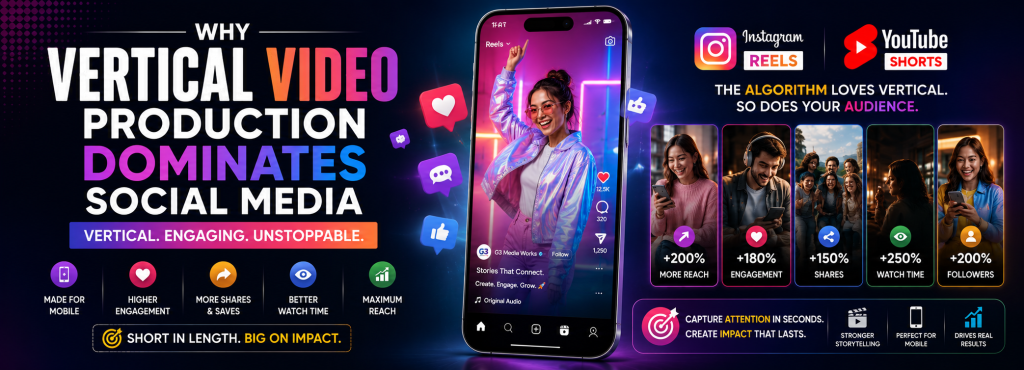
That is exactly Why Vertical Video Production Dominates Social Media today. Modern audiences spend most of their time on smartphones. Consequently, vertical videos have become the preferred format across almost every social media platform. Businesses that embrace this format capture attention faster, improve engagement, and connect with audiences naturally.
Why Vertical Video Production Dominates Social Media in the Mobile Era
The way people consume content has completely changed.
Television once dominated entertainment.
Desktop computers later transformed digital media.
Today, smartphones lead everything.
People watch videos while traveling.
They browse during lunch breaks.
They scroll before sleeping.
Most importantly, phones are naturally held vertically.
Therefore, Why Vertical Video Production Dominates Social Media becomes easy to understand.
Vertical videos match natural smartphone behavior.
Viewers no longer need to rotate their devices.
The experience feels effortless.
Mobile-First Viewing Has Changed Everything
Modern audiences prefer content that:
- Fills the entire screen.
- Loads quickly.
- Feels immersive.
- Requires no screen rotation.
- Delivers information instantly.
Vertical videos satisfy each of these expectations.
Consequently, viewer engagement continues increasing.
Vertical Videos Capture Attention Within Seconds
Social media moves quickly.
Every second matters.
Users scroll through hundreds of posts daily.
A horizontal video occupies only part of the mobile screen.
A vertical video fills the display completely.
Nothing competes for attention.
Imagine opening Instagram.
One video occupies your entire screen.
Bright visuals appear instantly.
The story begins immediately.
Without realizing it, you continue watching.
This explains Why Vertical Video Production Dominates Social Media.
Full-screen storytelling reduces distractions.
Attention remains focused on the content.
The First Three Seconds Matter Most
Successful vertical videos often include:
- A strong opening scene.
- Fast movement.
- Clear captions.
- Bold visuals.
- Emotional expressions.
- Immediate storytelling.
Capturing attention early improves viewer retention.
Every Social Media Platform Prioritizes Vertical Videos
Social media platforms continuously adapt to audience behavior.
Short-form vertical content receives significant visibility.
Instagram promotes Reels.
Facebook highlights vertical videos.
YouTube Shorts attract millions of viewers daily.
TikTok was built entirely around vertical storytelling.
Consequently, businesses investing in vertical content receive greater opportunities for organic reach.
This is another reason Why Vertical Video Production Dominates Social Media.
The platforms themselves encourage the format.
Platforms That Favor Vertical Videos
Vertical videos perform exceptionally well on:
- Instagram Reels.
- Facebook Reels.
- TikTok.
- YouTube Shorts.
- Snapchat.
- LinkedIn mobile feed.
Publishing vertical content across multiple platforms increases overall visibility.
Vertical Video Production Creates Better Engagement
People enjoy interacting with content that feels natural.
Vertical videos create an immersive viewing experience.
Imagine watching a behind-the-scenes video from a restaurant.
The chef prepares a signature dish.
Customers react with excitement.
The camera follows every movement naturally.
The audience feels present inside the kitchen.
This emotional connection encourages viewers to:
- Like the video.
- Leave comments.
- Share it.
- Save it.
- Follow the page.
This demonstrates Why Vertical Video Production Dominates Social Media through meaningful engagement.
Vertical Videos Encourage More Interaction
Businesses often experience:
- Higher engagement rates.
- Increased watch time.
- Better audience retention.
- More social shares.
- Greater follower growth.
- Improved brand awareness.
Every interaction helps the content reach more people.
Storytelling Becomes More Personal with Vertical Video Production
Stories become more intimate when viewed vertically.
Faces appear larger.
Expressions become clearer.
Emotions become stronger.
Imagine a healthcare organization documenting a patient’s recovery.
The patient’s smile fills the screen.
Family members celebrate.
Doctors share encouraging words.
The audience feels emotionally connected.
That is the strength of Why Vertical Video Production Dominates Social Media.
Vertical framing places viewers closer to the story.
Best Stories for Vertical Videos
Vertical storytelling works exceptionally well for:
- Brand stories.
- CSR initiatives.
- Customer testimonials.
- Product launches.
- Behind-the-scenes videos.
- Employee stories.
- Event highlights.
- Educational content.
Authentic storytelling naturally performs better.
Vertical Videos Improve Brand Visibility
Businesses compete for attention every day.
Standing out has become increasingly difficult.
Vertical videos help brands remain visible.
Imagine a fashion brand launching its new collection.
Instead of posting static images, the company publishes short vertical videos showing models wearing the latest designs.
Every outfit appears dynamic.
Movement creates excitement.
Customers imagine themselves wearing the products.
Consequently, the brand becomes more memorable.
This is another reason Why Vertical Video Production Dominates Social Media.
Movement captures attention more effectively than still images.
Brands Use Vertical Videos To Showcase
- Product demonstrations.
- Customer experiences.
- Office culture.
- Company events.
- Brand values.
- Service explanations.
Creative storytelling strengthens brand recognition.
Vertical Video Production Is Cost-Effective
Producing engaging content no longer requires massive budgets.
Many successful vertical videos are created using smartphones.
Simple lighting.
Clear audio.
Creative editing.
Authentic storytelling.
These elements often outperform expensive productions.
Small businesses can compete alongside larger organizations.
Consequently, Why Vertical Video Production Dominates Social Media is closely connected to accessibility.
Every business has the opportunity to create impactful content.
Affordable Equipment for Vertical Videos
Many creators begin with:
- Smartphone cameras.
- Wireless microphones.
- Portable LED lights.
- Tripods.
- Gimbals.
- Simple editing software.
Creativity matters more than expensive equipment.
Vertical Videos vs Horizontal Videos
For many years, horizontal videos dominated television and YouTube.
Today, viewer habits have changed.
Most content is consumed on smartphones.
People naturally hold their phones vertically.
As a result, vertical videos provide a smoother viewing experience.
Imagine watching a restaurant promotion.
A horizontal video leaves empty spaces on the screen.
The viewer may rotate the phone.
Many users simply continue scrolling.
Now imagine the same video in a vertical format.
The entire screen is filled.
Every detail becomes visible.
The story feels more immersive.
This clearly explains Why Vertical Video Production Dominates Social Media.
The format matches modern viewing behavior.
Comparison Between Vertical and Horizontal Videos
| Feature | Vertical Video | Horizontal Video |
|---|---|---|
| Mobile Experience | Excellent | Moderate |
| Full-Screen Viewing | Yes | No |
| Social Media Reach | High | Moderate |
| Audience Engagement | High | Average |
| Best Platforms | Reels, Shorts, TikTok | YouTube, TV |
| Storytelling Style | Personal | Cinematic |
| Watch Time | Higher | Lower on mobile |
| User Convenience | Very High | Moderate |
The comparison highlights why vertical videos continue to perform better across social platforms.
Best Practices for Vertical Video Production
Creating a vertical video requires more than changing the camera orientation.
Every frame should be planned carefully.
The goal is to keep viewers engaged from beginning to end.
When creating vertical content:
- Start with a strong visual hook.
- Keep the message clear.
- Focus on one idea.
- Use subtitles.
- Maintain steady camera movement.
- End with a clear call-to-action.
These simple techniques demonstrate Why Vertical Video Production Dominates Social Media.
Consistency creates stronger audience engagement.
Tips for Better Vertical Videos
For better results:
- Use natural lighting.
- Record clear audio.
- Keep scenes short.
- Add captions.
- Use smooth transitions.
- Include your brand naturally.
- Optimize for mobile viewing.
Small improvements create a significant difference.
Common Mistakes to Avoid in Vertical Video Production
Even creative ideas can fail if basic mistakes are ignored.
Avoid these common issues:
- Slow introductions.
- Excessive text on screen.
- Poor lighting.
- Unclear audio.
- Shaky camera movement.
- Long video duration.
- Weak storytelling.
- Missing captions.
Each mistake reduces audience retention.
Avoiding these problems helps explain Why Vertical Video Production Dominates Social Media successfully.
Keep the Viewer Interested
Ask yourself:
- Does the video grab attention immediately?
- Is the message easy to understand?
- Does every scene add value?
- Will viewers watch until the end?
If the answer is yes, your content is more likely to succeed.
How Different Industries Benefit from Vertical Video Production
Vertical videos work across almost every industry.
Retail brands showcase products through quick demonstrations.
Healthcare organizations share patient success stories.
Educational institutions promote student achievements.
Restaurants highlight signature dishes.
Real estate companies offer property tours.
Travel businesses capture destination experiences.
Corporate organizations present employee culture.
CSR campaigns inspire communities.
Every business has a story worth sharing.
Consequently, Why Vertical Video Production Dominates Social Media applies to businesses of every size.
Measuring the Success of Vertical Videos
Success is measured through engagement rather than views alone.
Businesses should monitor:
- Video completion rate.
- Average watch time.
- Audience retention.
- Likes.
- Comments.
- Shares.
- Saves.
- Follower growth.
- Website visits.
- Conversion rate.
These metrics reveal how effectively the content connects with viewers.
Regular analysis helps improve future videos.
Questions to Evaluate Performance
Ask your team:
- Did viewers watch until the end?
- Was the opening engaging?
- Were people commenting?
- Did viewers share the content?
- Was the call-to-action successful?
Every answer helps refine your strategy.
Frequently Asked Questions
Why are vertical videos more effective?
Vertical videos match the natural way people hold smartphones, creating a more immersive and convenient viewing experience.
Which platforms favor vertical videos?
Instagram Reels, YouTube Shorts, TikTok, Facebook Reels, Snapchat, and LinkedIn all support vertical video content.
How long should a vertical video be?
Most successful vertical videos are between 15 and 60 seconds, depending on the platform and objec
Can small businesses benefit from vertical video production?
Absolutely.
A smartphone, creative storytelling, and consistent publishing are often enough to create engaging content.
The Future of Vertical Video Production
Social media continues to evolve.
However, one trend remains consistent.
Short, mobile-first content is becoming increasingly important.
Artificial intelligence.
Interactive features.
Shoppable videos.
Live streaming.
Creator collaborations.
All of these innovations continue supporting vertical content.
Businesses that invest in vertical storytelling today will remain competitive tomorrow.
That is why Why Vertical Video Production Dominates Social Media will continue shaping digital marketing strategies.
Final Thoughts on Why Vertical Video Production Dominates Social Media
Attention is the most valuable asset in today’s digital world.
Brands have only a few seconds to make an impression.
Vertical videos help businesses capture that attention quickly.
They create stronger engagement.
They improve storytelling.
They increase visibility.
Most importantly, they connect with audiences where they spend the majority of their time—on mobile devices.
At G3 Media Works, we specialize in creating high-quality vertical videos that are designed for Instagram Reels, YouTube Shorts, TikTok, Facebook Reels, and other mobile-first platforms. Whether you need brand promotions, CSR videos, product launches, event highlights, or micro drama series, our creative team transforms ideas into engaging vertical content that captures attention and delivers measurable results.
- See our capabilities: A diverse portfolio of our advanced video solutions can be explored directly on our dedicated media production services portal.
- Consult our experts: Your unique marketing or narrative goals can be mapped out into a custom script framework by our team. Contact G3 Media Works today to schedule an initial creative brief.
- Stay informed: Regular updates regarding streaming trends, cinematography breakthroughs, and mobile marketing metrics are published on our official LinkedIn company page.
